

To the outside world, the Dupont de Ligonns family appeared to lead a somewhat ordinary life in the outskirts of the western French city of Nantes. Described as a polite and discreet family man by his neighbours, Xavier worked as an entrepreneur, selling advertising space and tourist guide listings. His wife, Agns, worked as a local school assistant and taught catechism. Their children Benot, 13, Anne, 16, Thomas, 18 and Arthur, 20 attended school.
But on April21,2011, local police called to the home by friends and family concerned by the familys silence and the fact that the house appeared to have been shuttered made a horrific discovery: Agns, the four children, and even the familys two Labradors, were found buried under the terrace.
From top to bottom, from left to right: Xavier Dupont de Ligonns, his wife Agns, andtheir children Thomas, Arthur, Anne and Benot.
Their bodies had been covered in quicklime a chemical component known to speed up decomposition wrapped in hessian sacks and sealed under a fresh slab of concrete. The autopsies showed they had allbeen sedated and shot in the head. When they were found, they had been dead for more than two weeks.
But one family member was missing: Xavier Dupont de Ligonns.
Weird messages and head-start
The father quickly became the prime suspect in themurderinvestigation. Not least because he had recently inherited the gun used in the killings, but also because police could link him through receipts found in the house and credit card purchases to the material used to bury the victims.
Read moreInternational alert issued for father of slain Nantes family
The evidence against him was further consolidated when members of the extended family then receiveda bizarre letter, dated a few days after the murders. In the letter, Xavier explained that he had been working as a secret agent for the American Drug Enforcement Administration (DEA), but that his cover had been blown. The whole family had been forced to go into hiding somewhere warm, he wrote, and had been given new identities. They would not be able to contact anyone for several years, he explained. The letter also contained instructions on what they needed to do with the familys belongings. Although most of it was given away, he wanted some of them to be sold, and the money to be transferred to his sisters bank account.
His wifes employer also received strange messages: First, that she had been hospitalised with gastroenteritis, and then that she was resigning because her husband had received a once-in-a-lifetime work opportunity in Australia. The two youngest childrens schools received similar notes.
When policebegantheir manhunt for Dupont de Ligonns, the murder suspect already had a comfortable, 17-day, headstart. Still, thanks to security cameras and hotel stays paid via credit card, investigators could trace at least the first week of his escape across France.
The Texan appeal
But on April 15 almost a week before police was even called to the crime scene in Nantes Dupont de Ligonns suddenly disappeared into thin air.
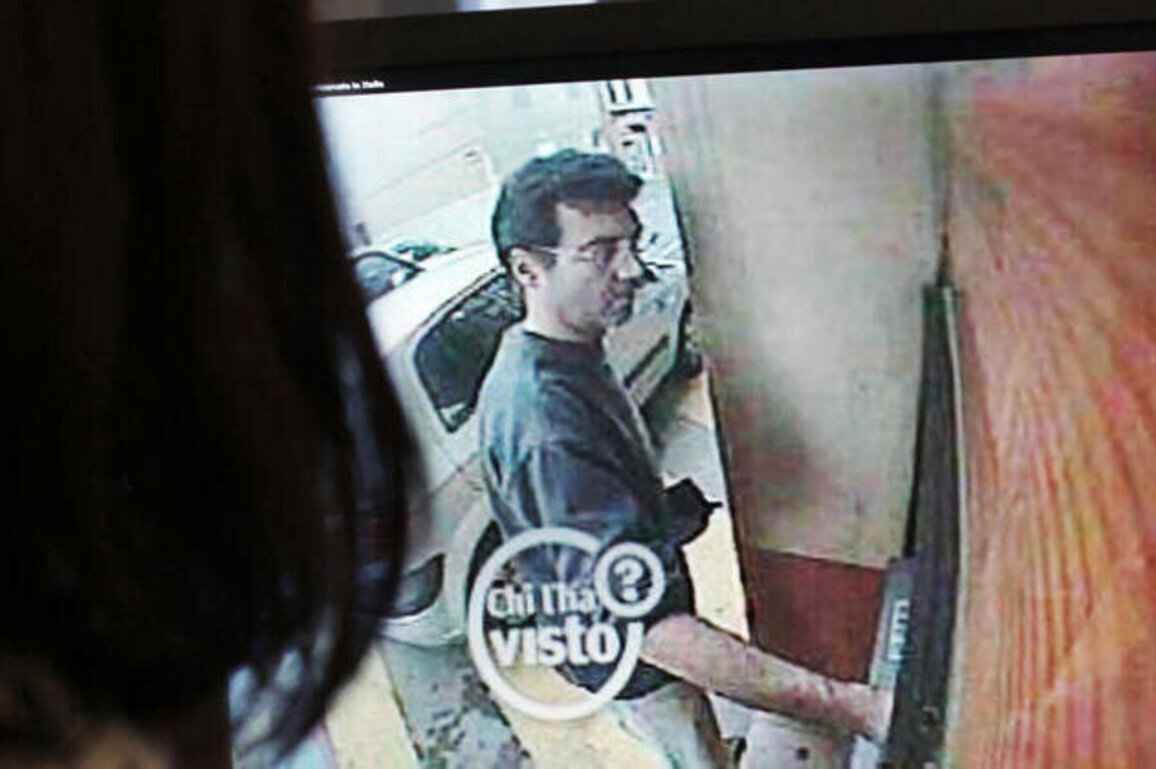
A CCTV camera at a motel parking near the southern French village of Roquebrune-sur-Argens is believed to have caught the last known glimpses of him. On the footage, he can be seen walking out of the parking lot, leaving his car behind.
A handout picture shows Xavier Dupont de Ligonns and his wife Agns dancing to country music on November 15, 2007, in the western French city of Nantes.
For years, the mystery surrounding Dupont de Ligonnss disappearance has fascinated the French public and frustrated investigators. While some believe he took his life, others are convinced he is still alive. Doing a Xavier Dupont de Ligonns is now a French quip to mean that someone has vanished without a trace.
Read moreFrench man held in Glasgow 'not murder suspect' wanted for killing family
Earlier this year, a retired investigator who had spent years working on the case, visited the sheriff in Brewster County a small Texas county the suspect had allegedly held especially close to his heart to see whether he might have any leads. The visit prompted the sheriff to post a public appeal on Facebook to which at least one person responded, saying they had seen a person in the area resembling the suspect in 2020.
Digital footprint?
The latest twist in the case emerged on Monday, when regional French newspaperOuest-France published an investigationsuggesting that Dupont de Ligonns may have left a digital footprint several years after his disappearance.
The paper had analysed the posts and profiles of cite-catholique.com a niche Catholic webforum Dupont de Ligonns had frequently used through two different accounts to air his loss of faith and othertheological frustrations prior to his disappearance.
Ouest-France said it had now identified a third account potentially linked to the suspect, and that it had been active all the way up until 2017 some six years after the murders.
The paper had enlisted the help of a stylometry expert, and said that they had found striking similarities in the way the person behind the third account expressed themselves, and those that had previously been run by Dupont de Ligonns. The account had also interacted with many of the same contacts that the suspect used to exchange with, and on at least one occasion, it cited the same perceived contradiction in the Bible in virtually identical wording which the suspect had once noted in a private letter.
Claude Alain Roten, another stylometry expert the newspaper spoke to, said the markers are consistent: the punctuation, the syntactical habits, the accounts that interact theyre always the same.
Ouest-France also had a theory for why Dupont de Ligonns if he is still alive may have felt the urge to reappear on an online forum. Studies of long-term fugitives regularly show that total isolation is psychologically difficult to sustain. Most maintain some form of social or intellectual life, it wrote.
But, it underscored, a collection of clues is not proof, and that a technical data analysis would have to be made to support the hypothesis.
Meanwhile, French broadcaster M6 is on Tuesday set to aira special edition ofAppel tmoinsa show that appeals to the public for help in solving murder cases in which it will present a possible recent proof of life of the suspect. The investigator presenting the evidence is the same retired police officer who visited Texas back in March.
In all, police have received more than 1,850 tips related to Dupont de Ligonns and his disappearance since the 2011 murders. But so far, none of them have led to any breakthroughs in the investigation.
Originally published on France24